Further research and latest discoveries
Gertrude's brother? [pub: 20.05.2024]Gertrude's brother?
Something that I have learnt about family history research - never give up! Try, try and try again. I am certain that fruitless searches have yielded results on subsequent attempts. This may be due to improvements in search algorithms, new documents becoming digitised or, on my part, a more thorough look through search results.
Throughout childhood I was fascinated by the thought of having a Romanian great grandmother and what little was known about her was related on many occasions by my parents. One of those 'facts' was that Gertrude adopted the surname Morris because she had a brother with that name. Another memory I have is of my father speaking of the Acland Troytes in disparaging terms because of the way that they treated his mother, Josephine, during the years that she lived with them at Huntsham Court. I plan to examine this in further detail with reference to information I have gleaned from my research.
I have never found any evidence of another Schnitzer family member in England. Recently, reflecting on Gertrude's naturalisation application, I was prompted to return to the National Archives website and perform another search - for 'Schnitzer'. Scrolling down through the results, at position number 12, was a person of interest.
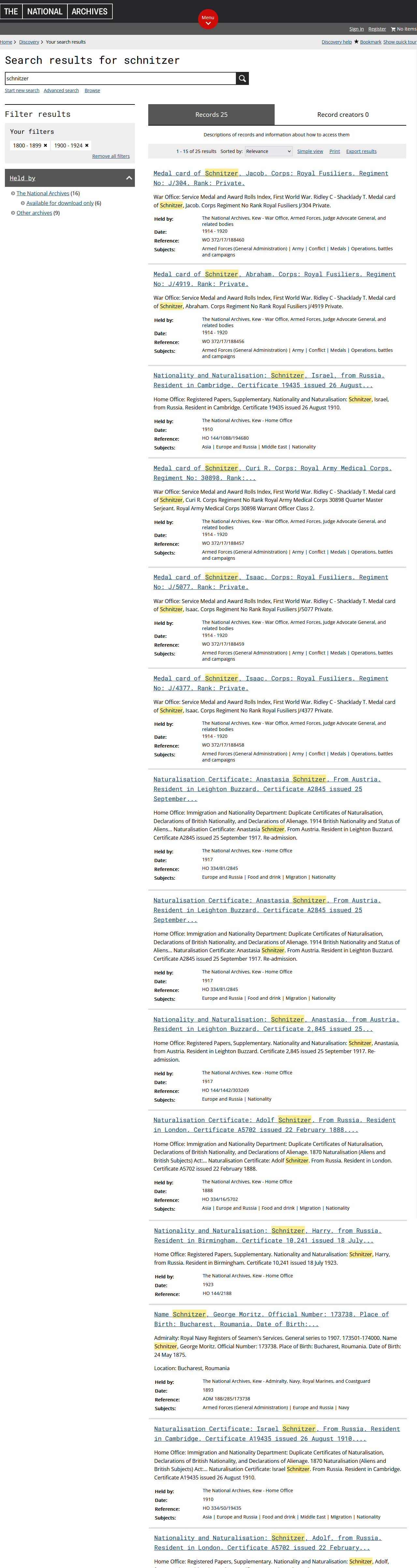
Schnitzer, George Moritz - Place of Birth: Bucharest, Roumania
The record for George Moritz Schnitzer is on the Royal Navy Registers of Seamen's Services, 1848-1939. Wow! This looks promising - Gertrude's naturalisation application gave her parents' names as George and Peppina Moriçean - it is very common for the eldest son to be given his father's name. Moritz is the German, Ashkenazi Jewish version of Morris. George was born in Bucharest on 24th May 1875, meaning he would have been Gertrude's elder brother by 11 years.
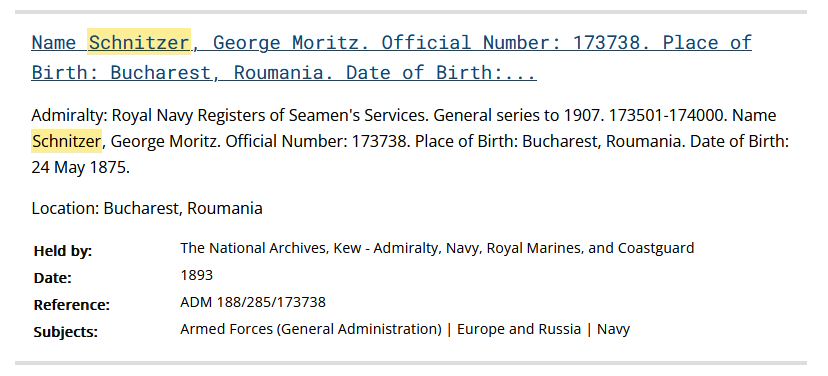
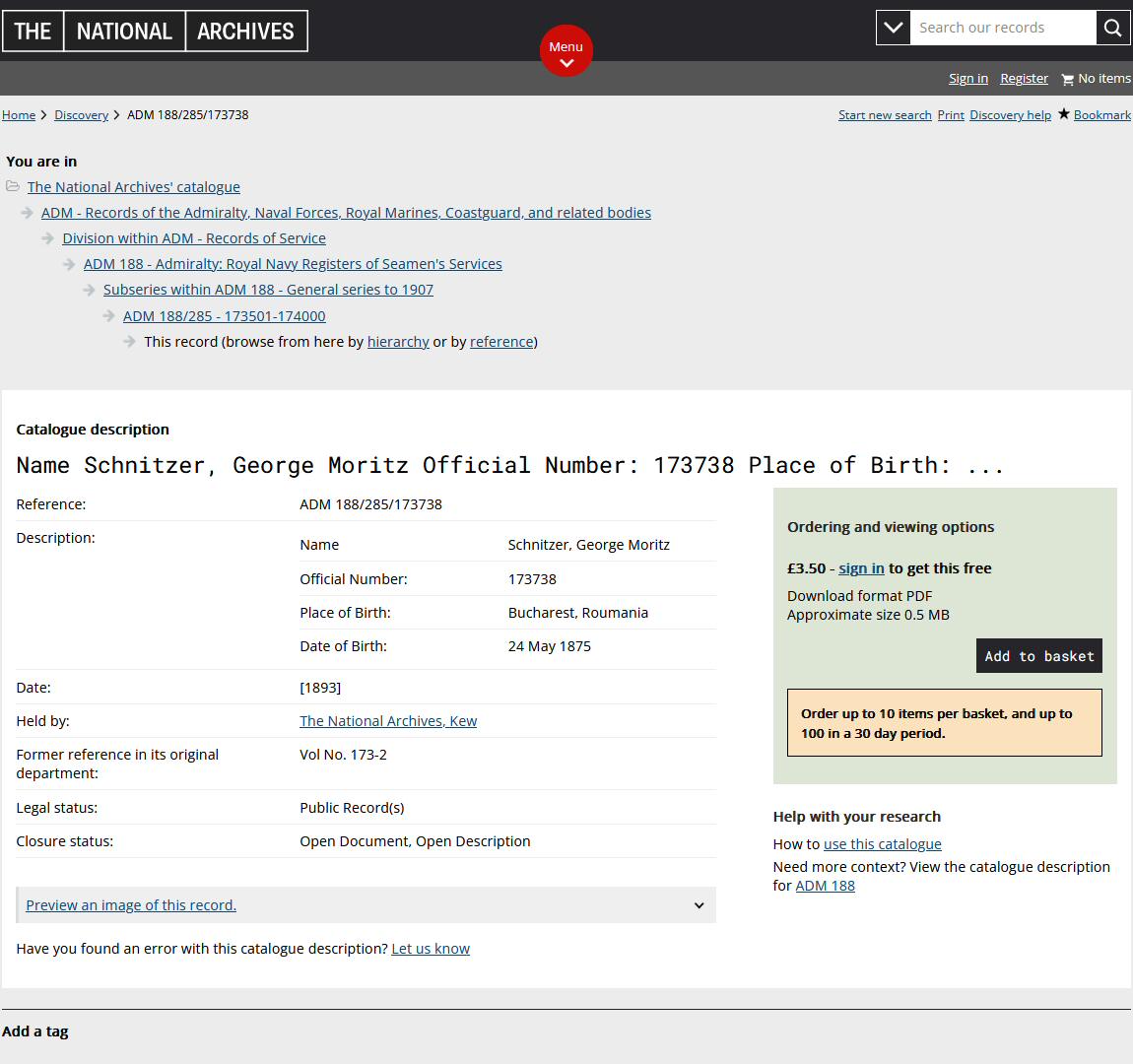
Download document reference ADM 188/285/173738
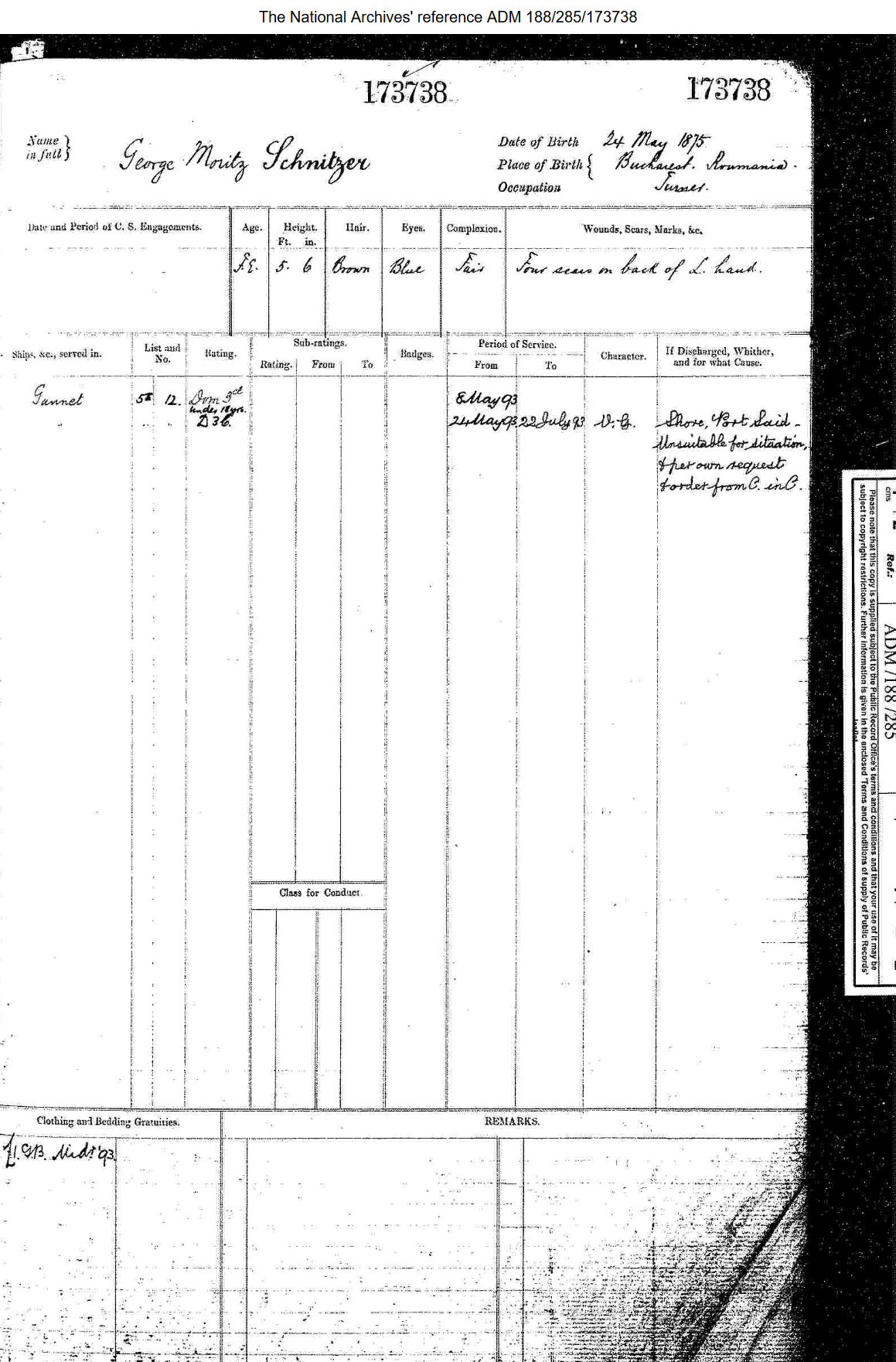
The document tells us a surprising amount about George Moritz Schnitzer. If interpreted correctly his occupation in the Navy was as a turner. He was 5' 6" in height with brown hair, blue eyes and a fair complexion. He had four scars on the back of his left hand.
Since there are two lines entered in his service record we can see that he had two commissions on HMS Gannet. The 'List and No.' column refers to the pay list of the ship's ledger and the ship's book number. 'Rating' is a naval term which would read 'Rank' in the army. The entry appears to be 'Dom 3??' for the first commission and 'under 18 yrs / D36' for the second.
George's service was a matter of months, from May to July 1893. His character is 'V.G.' presumably Very Good. The column headed 'If Discharged, Whither, and for what Cause.' states: 'Shore, Port Said - Unsuitable for situation, & per own request & order from C. in C.' (Commander in Chief).
The Gannet was launched in 1878 and was classified as a sloop of war and a colonial cruiser. The primary purpose of ships of this class was to maintain British naval dominance through trade protection, anti-slavery and long term surveying. Her final commission, January 1892 - March 1895, which covered the time that George was on board, was spent conducting survey work in the Mediterranean and the Red Sea.
More Questions ...
It is intriguing to speculate how a 17 year old, born in Bucharest, signed up to the Royal Navy. In late nineteenth century Romania antisemitism was on the rise and having been declared aliens, new measures made it difficult for Jews to gain Romanian citizenship. They were prevented from taking up most professions and in the 1890s legislation prevented Jewish children from the right to a state school or university education*. Large scale emigration of Jews from Romania commenced in the late 1870s. Until the 1905 Aliens Act Great Britain could be regarded as a relatively safe haven for Jews and other persecuted migrants. Although still a teenager George Schnitzer could have been seeking a better life through emigration and maybe escaping the same family that did not take the pregnant Gertrude into their protection.
George signed up to the Royal Navy just a few days before his 18th birthday and was put ashore at Port Said a couple of months afterwards. It appears that his departure was by mutual consent. There could be any number of reasons for this - maybe he suffered from seasickness, maybe his English wasn't good enough? What on earth became of him after he was discharged and alone in Egypt? If my theory is correct, that he is Gertrude's brother, he would have made his way to London.
*Born in 1886, this legislation would have prevented Gertrude from receiving a state education and could have played a part in what I believe was her close connection to the London Society for Promoting Christianity Amongst the Jews' mission in Bucharest.
Conclusions?
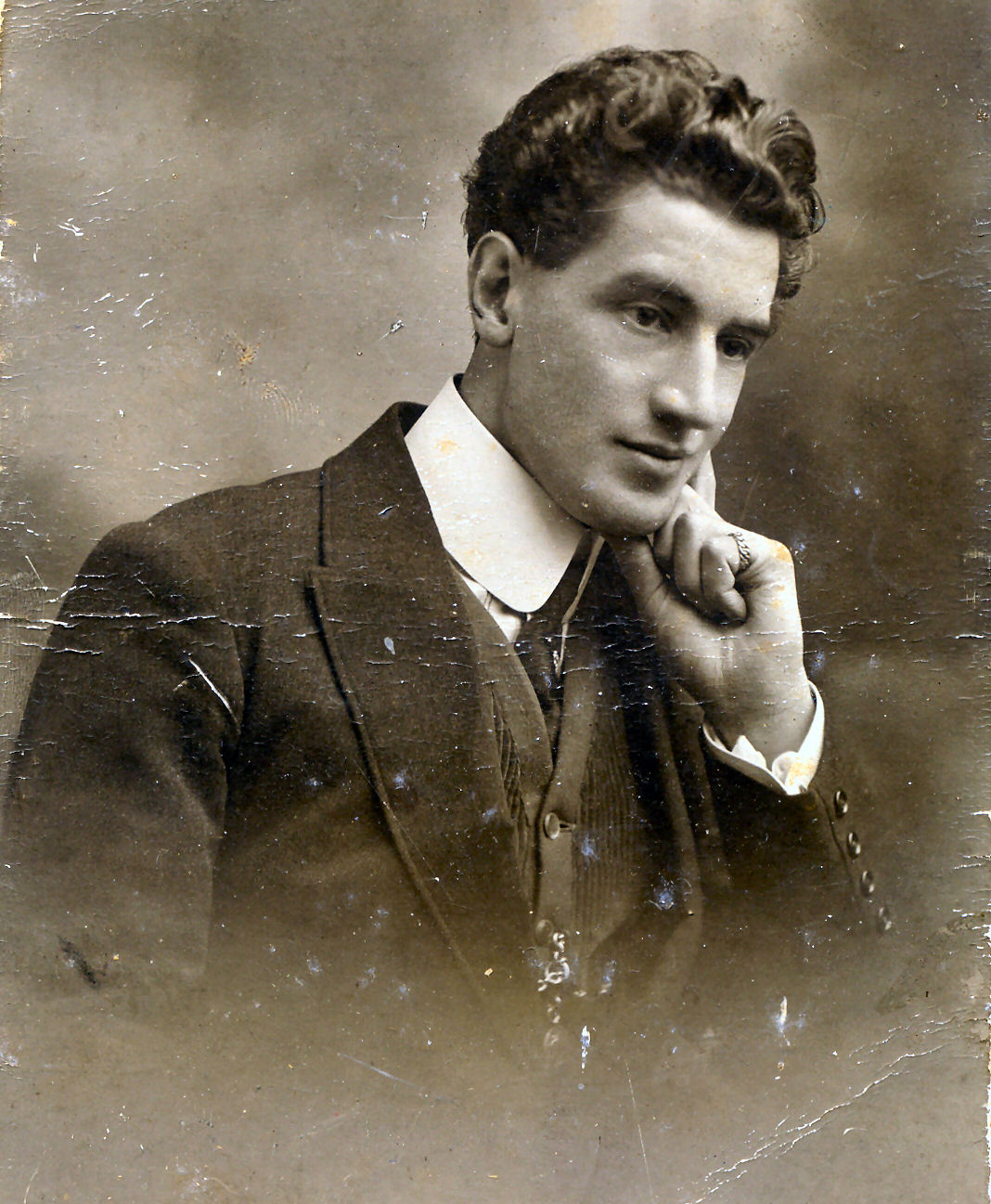
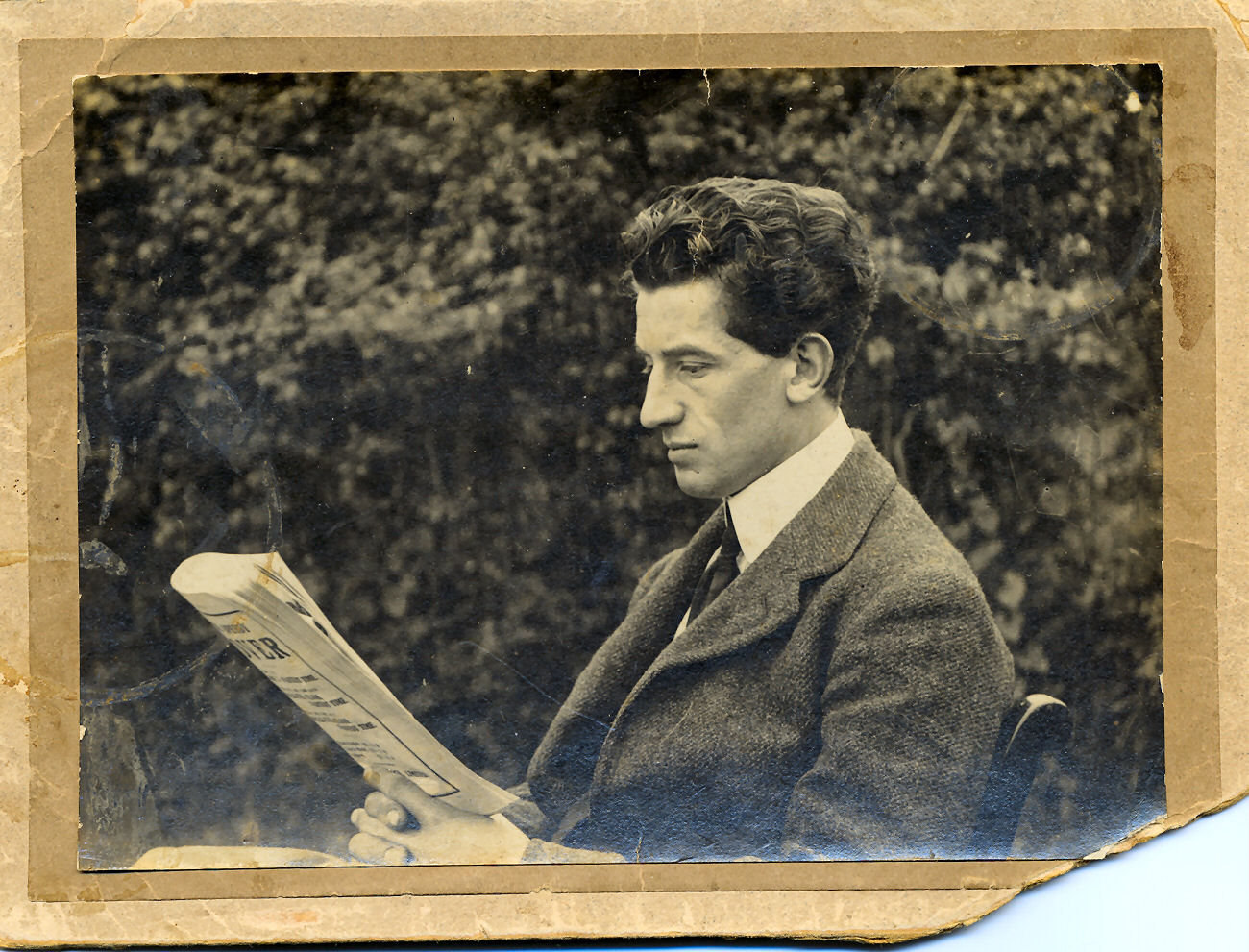
Can any conclusions be drawn from the discovery of George Moritz Schnitzer, born in Bucharest in 1875? There are compelling parallels between forenames, surname, dates and place of birth making it reasonable to say that on the balance of probability George Moritz Schnitzer was indeed Gertrude's brother and could have been the reason she was sent to London as a pregnant 13 year old in 1900. There is of course, currently, no hard evidence to support this and unfortunately neither of the photographs of the 'unknown man', kept by Josephine, clearly show the back of his left hand!